A Year Recording Southern Elephant Seals

Original Illustration by Lucut Bogdan
I had placed my microphones a short distance from the edge of an elephant seal harem, hoping to capture the group as an ambience. The harem stretched for roughly 80 metres and contained around 100 females. Somewhere on its far side, the beachmaster noticed another male. At around four tonnes, he had earned his position through fights and watched for rivals trying to reach the females at the harem’s edges. When he spotted the intruder, he moved across the beach with surprising speed and came very close to my microphones.
I was another 15 to 20 metres behind the setup, watching him come. I was terrified for the equipment, but being on Macquarie Island is a privilege. Part of that privilege is respecting the minimum approach distances around wildlife. I had positioned the microphones conservatively outside the harem, and I had to let the moment play out. The beachmaster rushed past with his blubber shifting from side to side. If the microphones had been a little farther forward, he might have flattened the blimp, recorder and everything inside it.
The seal passed without incident, so the recording continued. A few minutes later, two skuas (sub-antarctic predatory birds) came over to investigate and pulled out the USB-C cable powering the recorder. I saw them disconnect it, laughed, then quietly gathered the equipment and called it a day.
The microphones captured him rushing past, but the harem was too loud for the movement to be isolated. That recording never made the final collection. Some of my most memorable moments in the field, often didn't necessarily line up with the most useable files.
The first time I heard them
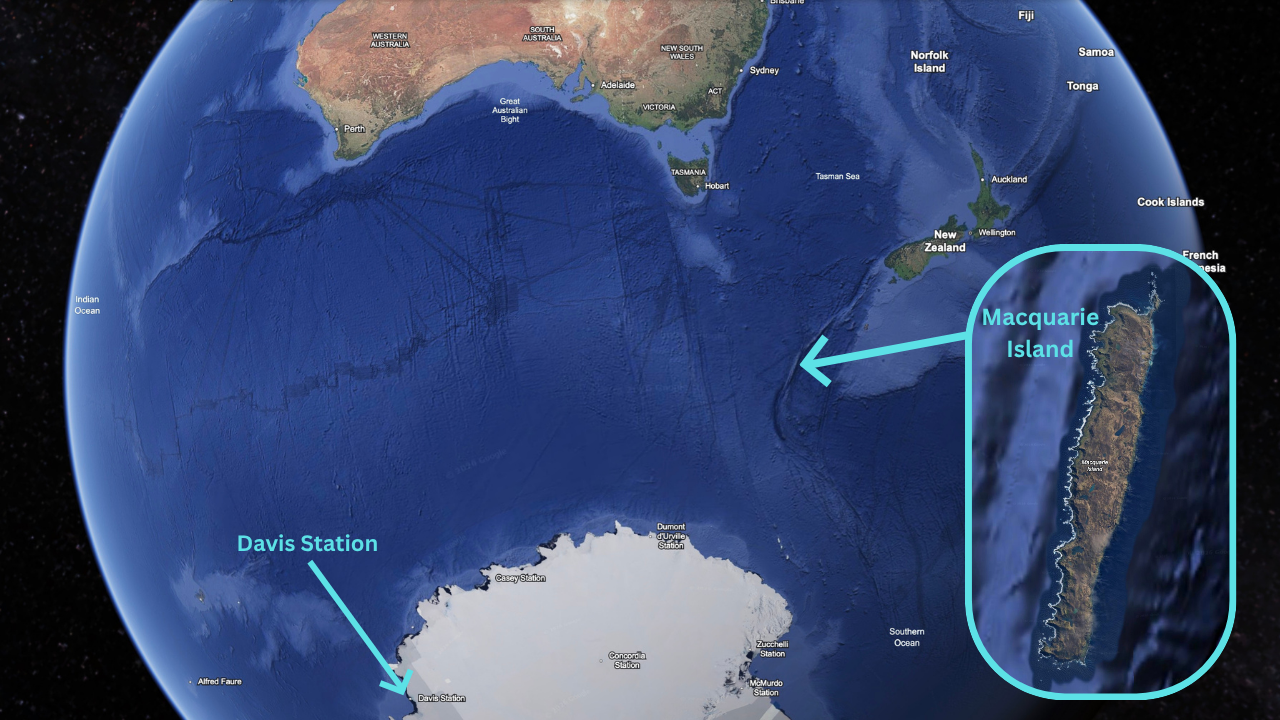
My fascination with southern elephant seals began during a six month deployment to Davis Station in East Antarctica in 2022–2023. On one of several trips to the Old Wallow, I saw an elephant seal resting beside the ice. It was easily the biggest seal I had ever seen. Those of us seeing one for the first time stood there equally amazed, while the people who had been south before seemed to enjoy our reaction. In retrospect, it was not even one of the larger males. These guys can get to an astonishing 6 metres.
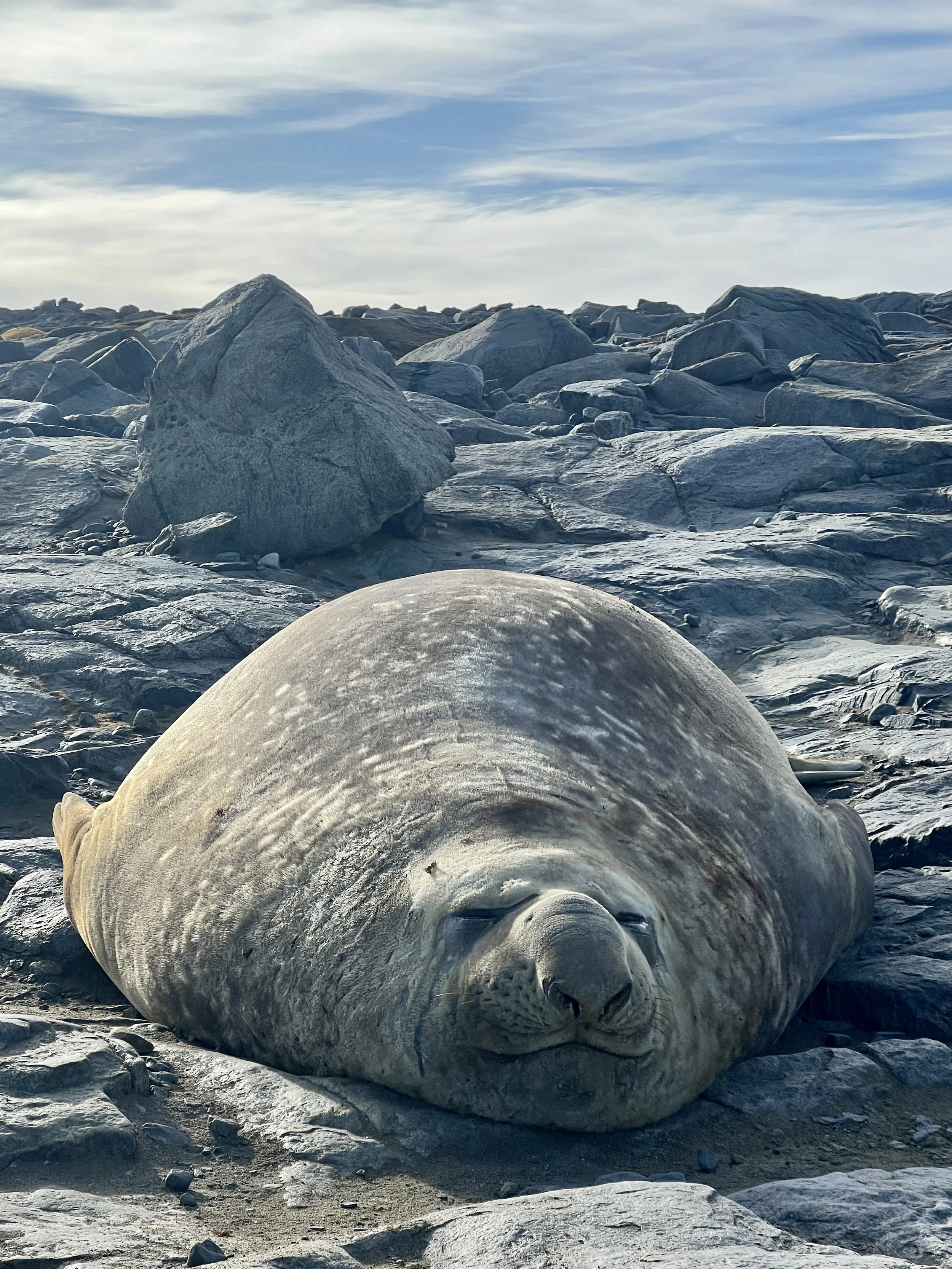
One of the first Southern Elephant Seals I saw - Davis Station, The Old Wallow - East Antarctica
It took a few more visits before I heard them vocalise and interact. I watched young males throw tantrums and fight. Their breathing was slow and deep, and I could feel their louder calls in my chest. But they could also produce ridiculous sounds completely unlike anything I expected from an animal that size.
I left Antarctica with material that would eventually become my sound library Antarctic Soundscapes. The elephant seal recordings were only one part of that wider collection, but the animals stayed with me. When I had the opportunity to spend 12 months on the Island in 2024–2025, I arrived with upgraded recording equipment and a plan to use the time well.
A year of listening
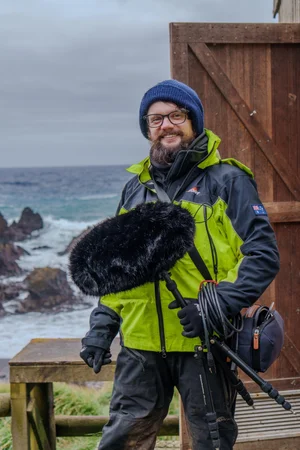
I spent 12 months on Macquarie Island as a Senior Communications Technical Officer with the Australian Antarctic Division. Recording was separate from that role, but outside my duties I took every opportunity I could to head out with my microphones. Some sessions took place around the station. During time away from work, I walked farther down the island, sometimes staying at remote field huts and recording on the beaches nearby.
The seals come and go from the island at different points in the year. Large males arrive, followed by the females, and then the harems form. Pups are born, become weaners and eventually make their first journey into the ocean. Learning what the year would look like for the seals helped me anticipate new recording opportunities before they happened. And observing their behaviour helped me understand their astonishing vocal range and set recording goals for specific types that impressed me, or struck me as particularly useful for creature design.
Following the wildlife rules and respecting the animals shaped how I approached each session. I positioned the equipment carefully, kept my distance and listened while the seals moved and behaved naturally around the micrphones. It was important to me that my recordings fit around their behaviour, not the other way around. That required patience, and I also found it produced the most wild and honest performances.
Waiting for the right conditions
Macquarie Island is sometimes called the green sponge. Rain falls on around 300 days a year, humidity sits close to 90 percent and the wind is almost constant. During my year there I saw everything from workable 10 or 20 knot days to storms pushing towards 100 knots. For the clean, detailed recordings I wanted, I generally needed the wind below 30 knots and ideally closer to 10 or 20.
Rain and humidity often ended a session before it began. The Schoeps microphones are sensitive, and exposing them to that much moisture would degrade them quickly. Then there was the Southern Ocean surf, with large waves adding loud, continually changing noise to the background. Even with a full year on the island, genuinely good recording days were few and far between, so when a useful weather window appeared I had to make the most of it.
Good weather was only part of it. I still needed to find seals that had moved farther up the beach or inland, away from the surf and the larger gatherings where calls overlapped. Penguins, petrels, albatrosses, skuas, gulls, terns and redpolls all added their own voices. Many days were not suitable for recording at all and even when conditions were more suitable, the seal vocalisations often sat too close to all that background noise for it to be used as creature design.
I kept heading out whenever the conditions allowed, knowing that I might come back without anything useful. But when the weather, the location and the animals all came together, it was glorious. A clean recording session could make my week, particularly because those days were so few and far between.
Capturing the detail
The project began as a collection of sub-Antarctic ambiences and wildlife recordings. As I captured more isolated, close-up calls, I realised there was enough material to build something specifically for creature design. From that point, whenever I recorded near the seals, I changed from the 96 kHz sample rate I used for ambiences to 192 kHz. This captured the high frequency content needed for the sounds to hold up much better when pitched down, stretched and processed.
My main setup was a Zoom F6 recording in 32-bit float, with two Schoeps CCM 4 microphones and a CCM 8 in double mid-side. I used a Cinela blimp with either Bubblebee or Cinela wind protection, depending on the wind speed. The arrangement covered forward, backward and to the sides. I could not predict where an animal might settle, so I used the DMS algorithm to select the strongest perspective in post.
The Zoom F6’s 32-bit float system was just as important. The largest male calls are the loudest animal vocalisations I have ever heard. A seal might be resting at a distance and breathing quietly, then move much closer to the microphones and bellow at a sound pressure level far beyond what the earlier gain setting could handle. Even without moving, the dynamic range from a quiet breath to a massive bellow or roar was enormous.
Trying to capture that range with traditional gain staging would have been almost impossible. Many of the best calls would have clipped, and I suspect the finished library would be a quarter of the size it is now. Recording in 32-bit float gave me the flexibility to save those sudden, unpredictably loud calls. Once I brought them back down to the correct level in RX, the recordings were in perfect condition.
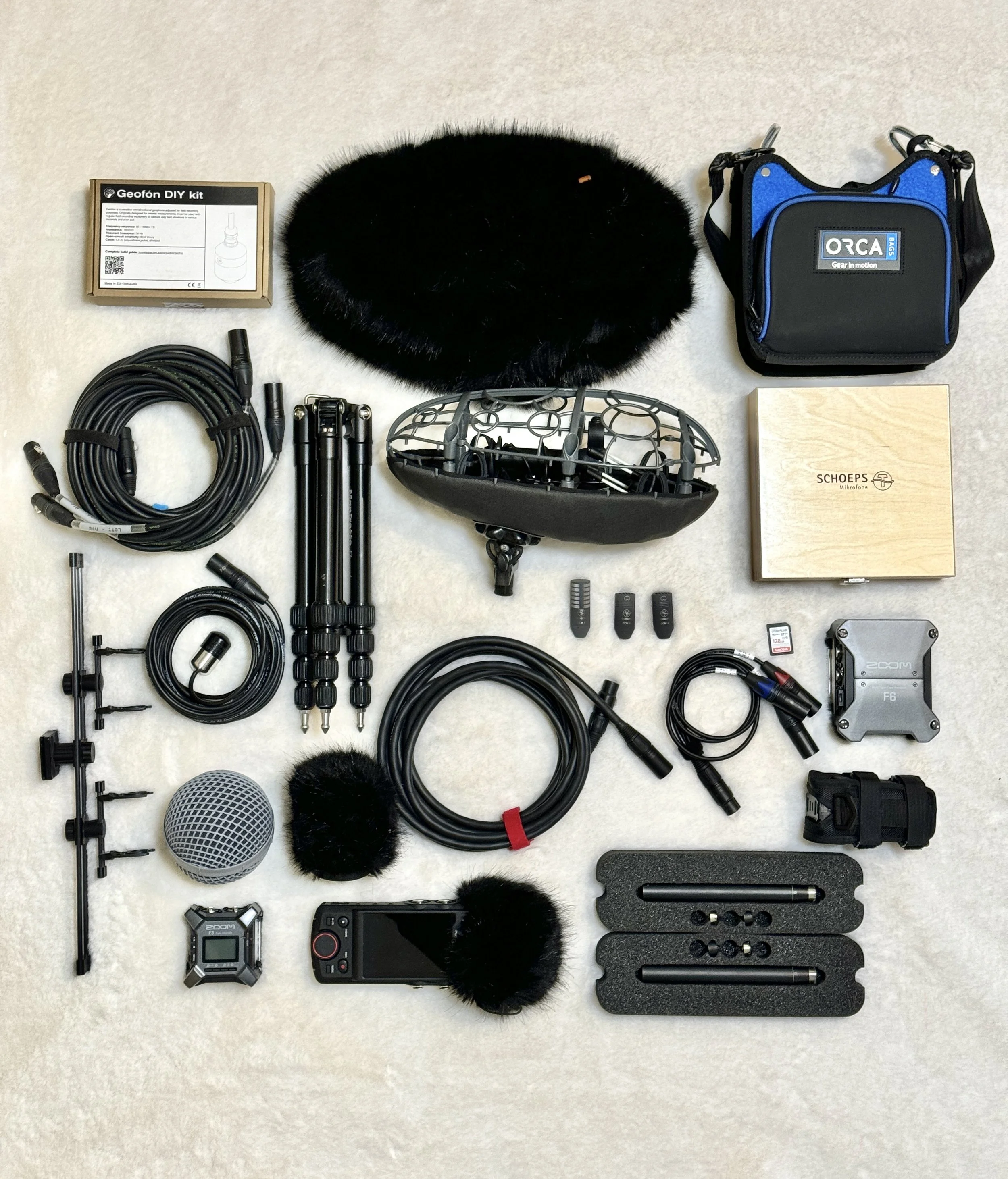
The full kit I used on the island
The voices I did not expect
I began the year most interested in the large males. Their bellows, roars and huge breaths are impressive and immediately suggest enormous creatures. Over time, I became just as interested in the females, but especially the weaners.
The seals voices varied as much as their appearance. Some returned from the ocean full of squid and as round as beach balls, while others carried fresh wounds or old bite scars from life in the Southern Ocean. Their sizes differ enormously and the spectrum from cute to ugly was really something to behold. Their voices had just as much range. One weaner might have a small, clean cry while the next produced something wet, rough or completely ridiculous. Add the adolescents and beachmasters and it starts to feel like a whole orchestra.
The weaners continued to surprise me. At a particular stage of their development, they seemed increasingly curious, moving around the beaches sniffing and investigating, particularly near water. Their quieter sounds included quick, curious breaths, snorts, small burps and gurgles. The strangest calls often came from interactions with other weaners. They played, argued and threw small tantrums at each other, producing noises so odd that I eventually developed a rule: if I heard an unfamiliar sound on the beach, it was definitely a weaner.
Those social calls were difficult to capture because the weaners behaviour was unpredictable. Sometimes they’d be in a frenzy of complaint, and other times they would be contented little frankfurts for the whole day. Capturing them meant setting the microphones up carefully and consistently, then waiting for an interaction to begin nearby.
Turning a year into 425 sounds
When I arrived home in Brisbane, I had several terabytes of recordings supported by field notes. My first task was to use those notes to separate and name the elephant seal recordings from the other wildlife and ambiences, then organise them into their own folders. I opened every elephant seal recording in iZotope RX, listened for useful calls, examined the signal-to-noise ratio and decided whether each file worked better as an ambience or an isolated creature source. Only the best isolated material moved forward. Each selected call needed to sit far enough above the noise floor to be separated cleanly from background noise such as wind, surf and other animals.
I processed each selected sound individually, using as little noise reduction as possible to preserve the high frequency detail, wet mouth sounds and natural texture. If repair created obvious artefacts, the sound did not make the library. I organised the exports by category, compared similar files and removed variations that were too close to one another. The aim was to give every category distinct choice: enough meaningfully different exhales for a user to find the weight, rhythm or texture they needed, without searching through near duplicates.
The finished library contains 425 sounds from adult males, females, pups and weaners, curated for character, variety, quality and practicality.
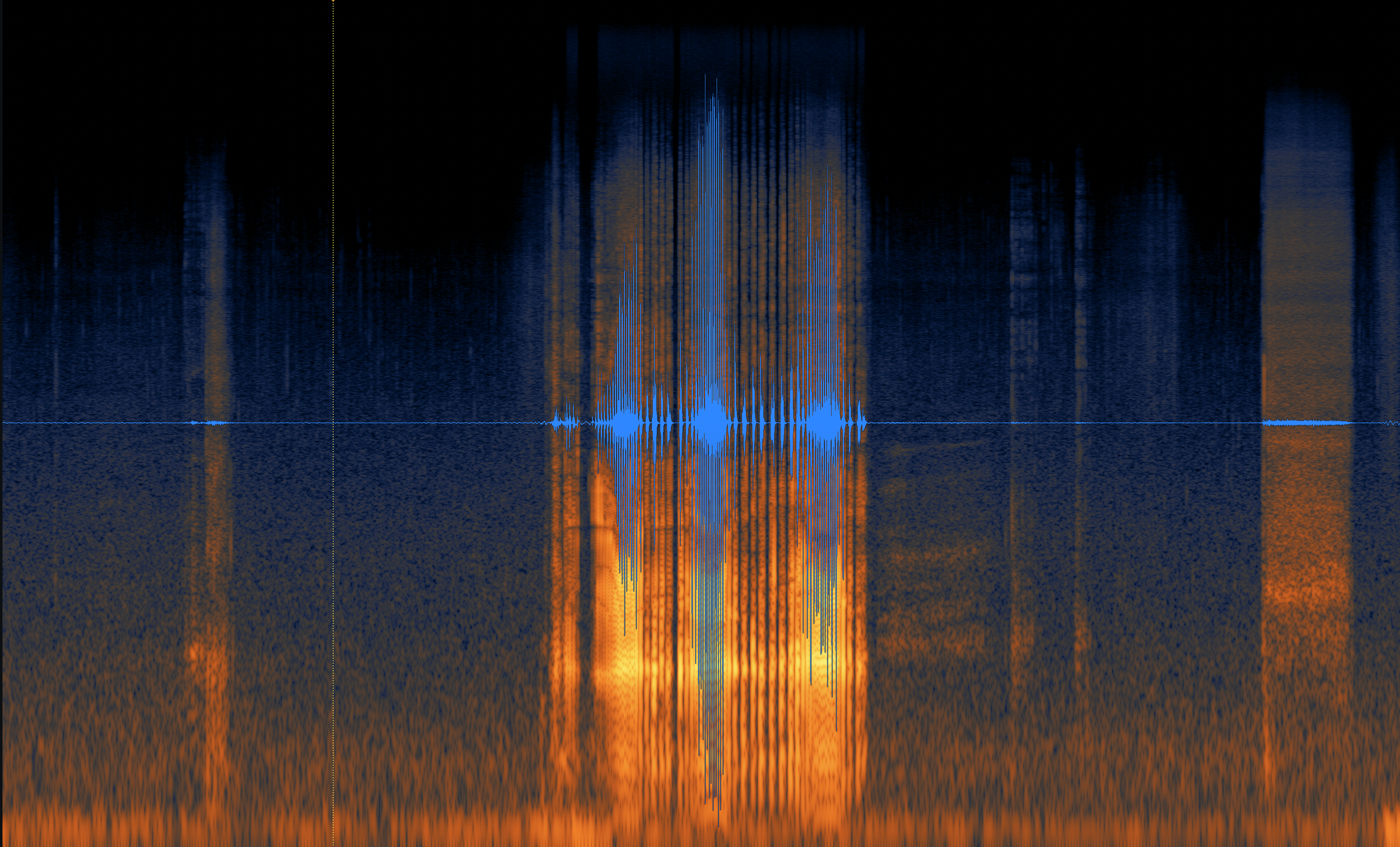
An isolatable capture - The noise floor here is around 50 dB below the vocalisation.
While the seal breath on the right mightn’t be isolatable, as its much quieter.
What the recordings cannot convey
When I listen now, I hear the character and emotion of these animals. I hear the guttural calls, the wet sounds and the ridiculous amount of drool. I hear huge males at their most imposing, and also the slow, deep breathing of seals completely at peace. They love to relax, often lying across one another like a bunch of sausages. Then one seal shifts or another tries to join the group, and everyone is upset for a moment. Before long they settle again, breathing together until the next small interruption starts it all over.
What the finished library cannot carry is what it felt like to live alongside them. It cannot reproduce the awe I felt when I saw my first enormous southern elephant seal beside the Antarctic ice, or the calm of sitting nearby while a group of males rested and breathed together. It cannot recreate watching the beaches change across a full year as males, females, pups and weaners moved through different parts of their life cycle. Those experiences left me with a real connection to southern elephant seals. They are some of the stinkiest and foulest animals I have ever encountered, and also some of my favourite creatures in the world.
I am proud that these recordings can now travel somewhere completely different. A breath, cry, roar or gurgle from a sub-Antarctic beach might become part of a monster in a film, a character in a game or a creature from a world that does not yet exist. I cannot wait to hear what other sound designers build from them.
Thanks for reading.
- Andy